Neoprene and Nerve Endings: How Your Exposure Suit Is Quietly Reshaping Every Shot You Take
Most underwater photographers obsess over ports, strobes, and sensor specs. Fewer stop to think about the layer of rubber between their hands and their camera controls. That's a mistake — because your exposure suit isn't a passive piece of kit. It's an active variable in every frame you shoot.
The thickness of your thermal protection affects your grip strength, your fine motor control, your buoyancy profile, and how much physical effort it takes to hold a shooting position. Change the suit, and you change the photographer. Understanding that relationship is one of the quieter upgrades you can make to your underwater imaging game.
The Dexterity Spectrum, From Rash Guard to Drysuit
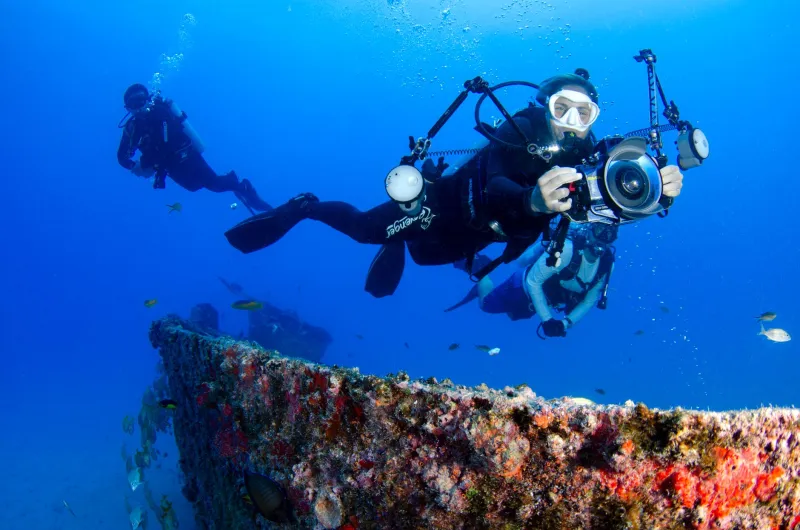
Let's start at the warm end. If you're shooting in the Florida Keys in August, or somewhere like Hawaii where the water hovers in the low 80s, you might be in a 1mm shorty or even just a rash guard for sun protection. At that point, your hands are essentially bare. You feel every control. You can work a zoom ring, adjust a port lock, or fire a manual strobe trigger with the same precision you'd have topside. That's a real advantage — one that most cold-water photographers would trade a lot for.
Step into a 3mm full suit and you're still in good shape. Some tactile feedback is gone, but experienced divers adapt quickly. The bigger shift comes around the 5mm mark, which is what most US divers wear in temperate Atlantic or Pacific waters — think the Carolinas, Southern California, or the Gulf Coast in winter. A 5mm glove starts to noticeably blunt your fingertip sensitivity. Buttons that were easy to find by feel now require a glance down at the housing. That split second costs you shots.
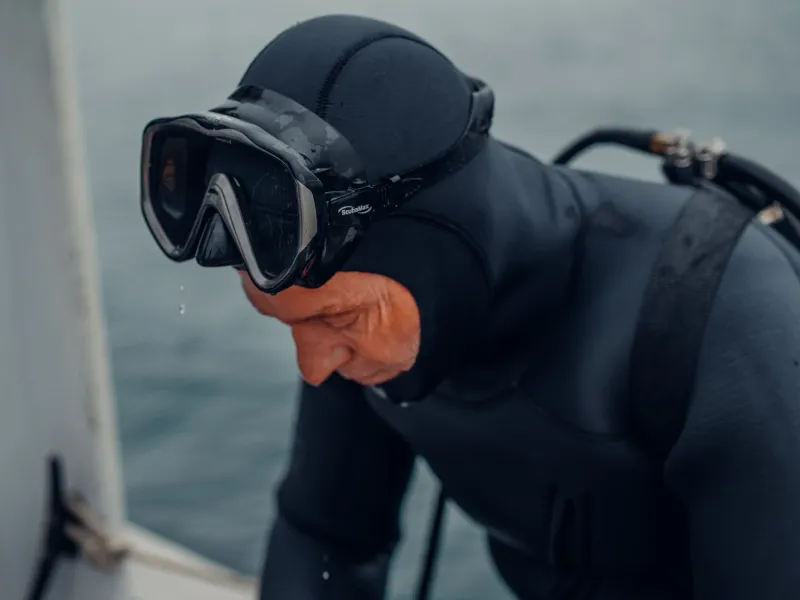
At 7mm and beyond — the territory of New England, the Pacific Northwest, or Great Lakes diving — you're dealing with real mechanical disadvantage. Your hands are wrapped in thick rubber, your joints are compressed, and grip strength drops measurably. Drysuit divers face a different but equally significant challenge: the glove system. Dry gloves, particularly the thicker neoprene or rubber varieties, can reduce hand dexterity to the point where operating a dual-strobe rig with manual controls becomes genuinely fatiguing.
Buoyancy Bulk and the Problem of Rig Positioning
Here's something that doesn't get talked about enough: a thicker suit changes your buoyancy profile, and that has direct consequences for how you compose shots.
A 7mm wetsuit adds significant positive buoyancy, which means you're adding more weight to compensate. That extra lead shifts your center of gravity and changes how you trim in the water. Many photographers in thick suits find themselves fighting a slight head-up angle, which is the enemy of precise macro work. Getting your housing level with a small subject — a nudibranch, a juvenile fish, a tiny crustacean — requires either better trim discipline or more physical effort to hold position.
Drysuits introduce another layer of complexity. The air trapped inside for thermal protection migrates as you change depth and body angle. Tilt forward to frame a shot on the seafloor and that air rushes to your feet, pushing your legs up. Tilt back and it floods into your shoulders. Experienced drysuit divers learn to manage this automatically, but when you're also managing a camera rig, strobe arms, and a subject that won't sit still, buoyancy management competes directly with photographic attention.
The practical result: cold-water photographers tend to get fewer keeper shots per dive not because the conditions are harder (though they often are), but because the physical overhead of managing their exposure suit leaves less cognitive bandwidth for the actual imaging.
What This Does to Your Shot Selection
This is where it gets interesting from a compositional standpoint. Your exposure suit doesn't just make certain shots harder — it actively steers you toward certain types of images and away from others.
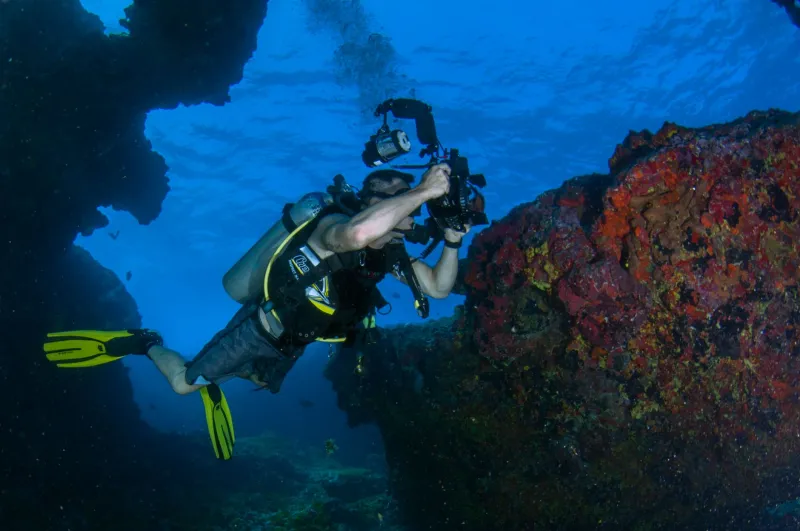
In warm water with minimal suit, you can work handheld macro with a short depth of field, making fine focus adjustments through a housing port with real precision. You can hold a static position close to a subject for extended periods without fighting buoyancy. That enables a style of patient, detail-oriented shooting.
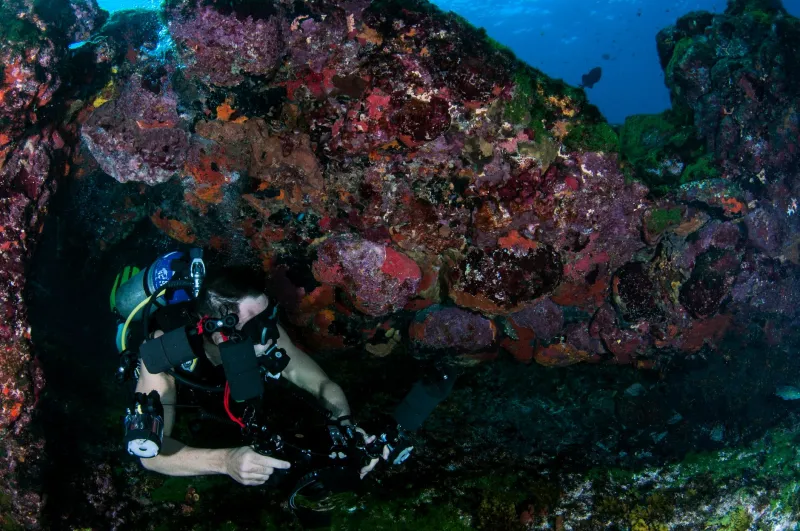
In cold water with a thick suit and heavy gloves, precision macro becomes a real challenge. Many photographers — consciously or not — migrate toward wider compositions that are more forgiving of small positioning errors. A wide-angle shot of a kelp forest or a large pelagic gives you more margin. The subject is bigger, the depth of field is more generous, and you don't need to be millimeter-perfect with your housing position.
There's nothing wrong with that adaptation. But it's worth recognizing it as a suit-driven constraint rather than a deliberate creative choice.
Practical Fixes That Actually Help
The good news is that most of these challenges have workable solutions — some gear-based, some technique-based.
Glove selection matters more than most people realize. If cold-water macro is a priority for you, it's worth investing serious time in finding the thinnest glove that still keeps your hands functional. Titanium-lined 3mm gloves, or thin neoprene contact gloves used under a dry glove shell, can recover a surprising amount of dexterity. Some Pacific Northwest photographers swear by heated glove liners for long dives, which keeps blood flowing to the fingers and maintains tactile sensitivity longer into a dive.
Housing control customization is underused. Many housing manufacturers offer different button sizes, extended control knobs, and lever-style replacements for small dials. If you're regularly diving in thick gloves, it's worth reconfiguring your housing controls for gloved operation. Larger, more positive controls reduce the precision required and let you make adjustments without looking away from your subject.
Trim practice pays dividends. Spending a session or two on pure buoyancy work — without the camera — in your cold-water rig does more for your photography than most gear upgrades. Once your drysuit trim is automatic, you free up mental space for the actual shooting.
Shoot wider in the thick stuff. This isn't giving up — it's playing to your conditions. Some of the most striking cold-water images from places like Monterey Bay or Puget Sound are wide compositions that take advantage of the dramatic visibility and large subjects those environments offer. Let your suit guide you toward shots that suit it.
The Bigger Point
Your camera system doesn't start at the housing and end at the port. It starts with you — your physical state, your comfort, your dexterity, and yes, what you're wearing. The exposure suit is part of the imaging system whether you think of it that way or not.
Photographers who recognize that relationship and account for it — who choose gloves deliberately, who practice trim in cold water, who adjust their shot selection to match their thermal protection — consistently produce better results than those who treat the suit as an afterthought.
The water temperature sets the conditions. Your exposure suit is your response. How you photograph in it is the variable you actually control.