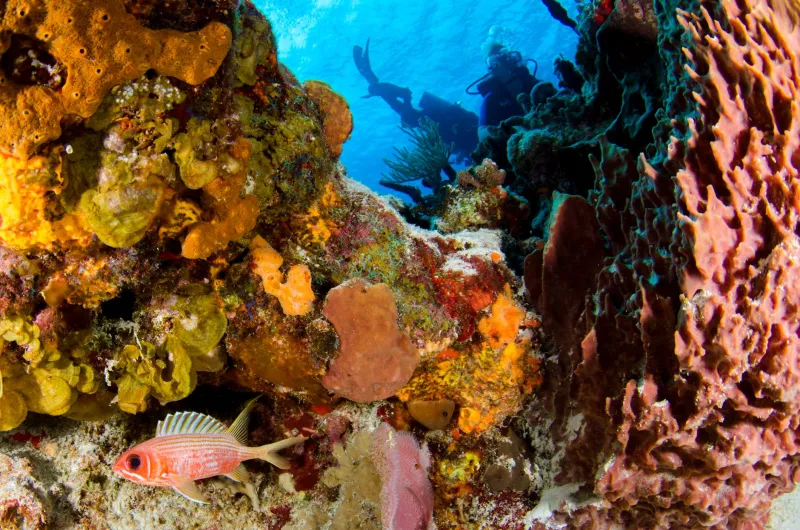
Big Glass, Tight Squeeze: When Your Wide-Angle Rig Becomes Your Worst Enemy on the Reef
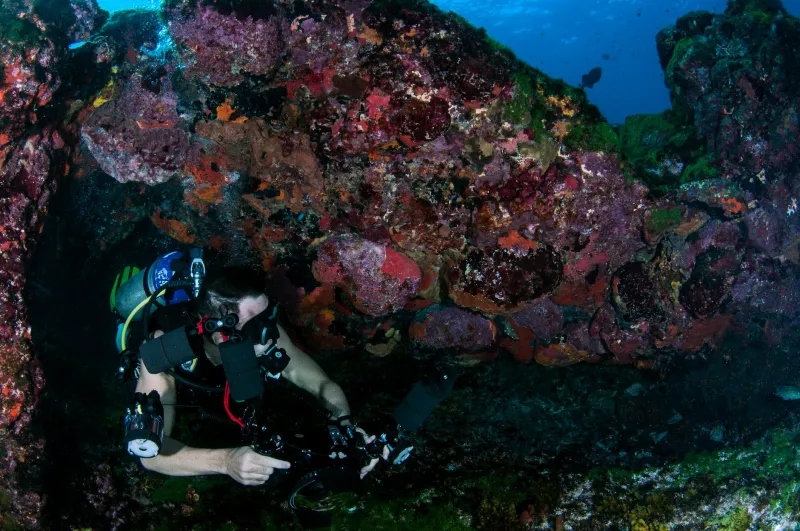
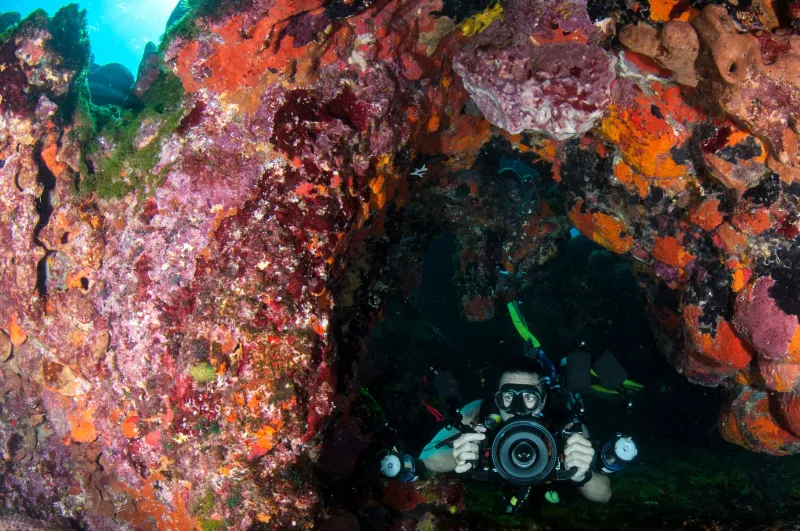
There's a particular kind of frustration that hits underwater photographers right around the 40-foot mark. You've kitted out with a wide-angle dome port, a housing the size of a small microwave, and arms extended with strobes that could illuminate a parking lot. You drop into what looked like a gorgeous reef on the dive brief, and then — the reef closes in. The corridor is barely shoulder-width. The nudibranchs are tucked into a slot you couldn't fit your fin into. And the hawksbill turtle you've been waiting your whole dive trip to photograph has wedged itself into a cleaning station you physically cannot approach without bulldozing coral.
This is the lens paradox. The more you invest in wide-angle underwater gear, the more committed you become to using it — even when the environment is actively working against you.
Why Wide-Angle Dominates the Conversation (And Your Gear Budget)
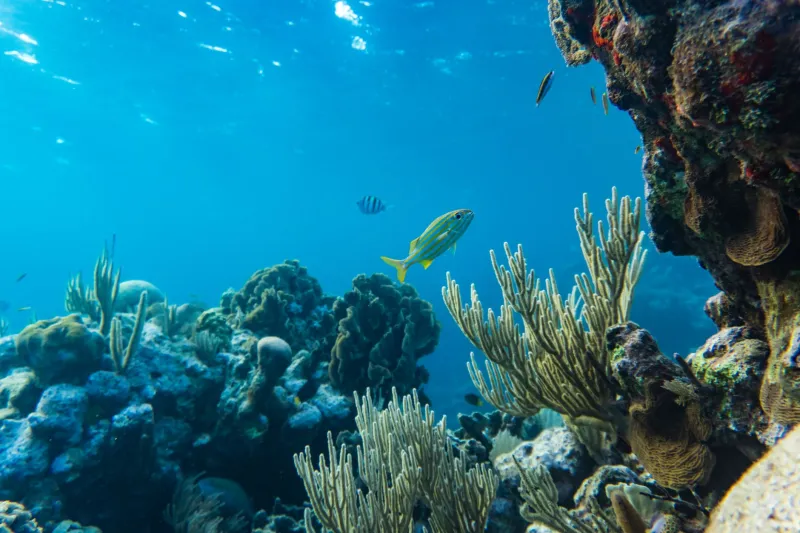
Wide-angle setups earned their reputation. For open-water reef faces, shark passes, whale encounters, and blue-water pelagic work, a quality wide-angle lens behind a dome port genuinely produces images that nothing else can match. You get that sweeping sense of scale, the dramatic foreground-to-background compression, the ability to get close while still capturing context.
The underwater photography community — and the gear market that serves it — has built an entire culture around this aesthetic. Look at any major underwater photo competition and wide-angle reef shots dominate the landscape categories. It makes sense that photographers chase the gear that produces those results.
The problem is that those award-winning shots are almost always taken in specific, wide-open conditions. They don't reflect the reality of most reef diving in the US, particularly in places like the Florida Keys, the Channel Islands, or the Hawaiian lava tube systems, where the most biologically rich zones are often the tightest and most physically demanding to navigate.
The Physics of the Problem
Wide-angle dome ports require distance to work properly. The optics are designed to correct for refraction at a specific working range, and they need physical space — both for the dome itself and for your arms, strobes, and body to position correctly relative to the subject.
In a narrow reef corridor, you lose that space immediately. You can't back up. You can't spread your arms for proper strobe positioning. You end up with harsh, center-lit subjects, clipped edges, and the kind of forced perspective distortion that makes interesting marine life look like it's being photographed through a peephole.
Worse, the physical bulk of a professional wide-angle rig in a confined space creates real environmental hazards. You're more likely to accidentally contact coral, stir up silt with your fins as you try to reposition, or spook the exact animal you're trying to photograph. The gear that was supposed to help you capture the reef ends up working against the reef itself.
When the Compact Option Isn't a Compromise — It's the Right Tool
This is where a lot of experienced underwater photographers quietly make a switch they don't always advertise. A compact mirrorless system — think Sony ZV-E10 or Olympus TG-7 in a housing — with a flat port and a moderate wide or standard lens can move through tight reef spaces in ways a professional rig simply cannot.
The reach-to-bulk ratio is completely different. You can extend one arm into a crevice, hold a position without needing to reposition your entire body, and get within the working distance of a flat port without turning the approach into a construction project.
For photographers who've invested heavily in full-frame mirrorless systems, this is a genuinely uncomfortable truth. But the physics don't care about your investment. A Sony A7R V in a Nauticam housing with a 16-35mm and dual strobes is a phenomenal tool in the right conditions. In a 24-inch-wide coral passage at 60 feet, it's a hindrance.
The Smartphone Angle (Yes, Really)
Here's where things get genuinely interesting. The current generation of smartphone housings — particularly setups built around the iPhone 15 Pro or Samsung Galaxy S24 Ultra — have reached a point where they're legitimately competitive in confined reef conditions.
The computational photography these phones apply handles the mixed lighting of tight reef spaces surprisingly well. The lenses are compact. The housings are slim. You can get into positions that would be physically impossible with a dedicated camera rig, and the results at social media and even moderate print sizes are hard to dismiss.
This isn't an argument for replacing your dedicated system. It's an argument for honesty about conditions. When you're planning a dive at a site known for swim-throughs, caves, or dense coral architecture, consider what you're actually going to be shooting — and whether your current rig is the right answer.
Building a Two-System Mindset
The most adaptable underwater photographers working American reef systems today tend to think in terms of conditions rather than commitment. They have a wide-angle setup for the dives that reward it, and they have a secondary compact option for the dives that don't.
This doesn't have to mean double the investment. A used housing for a compact mirrorless body can often be sourced for a few hundred dollars. If you already have a Sony or Fujifilm mirrorless body from another purpose, the housing investment is the primary cost — and in the context of a serious dive trip to somewhere like Palau or Cozumel, that investment pays for itself in rescued shots quickly.
The key mental shift is releasing the idea that bringing the smaller rig is somehow settling. It's not. It's reading the environment and responding intelligently — which is, ultimately, what good photography is about regardless of the medium.
The Reef Doesn't Care About Your Gear Investment
Tight reef corridors are where marine life concentrates. The overhangs, the cleaning stations, the crevices packed with glass shrimp and juvenile fish — these are biologically dense spaces precisely because they offer protection. The same physical features that make them ecologically valuable make them challenging for large camera systems.
If you've been consistently coming home from reef dives with technically sound but compositionally empty shots, it's worth asking an honest question: is the gear serving the diving, or is the diving being forced to serve the gear?
Wide-angle reef photography is genuinely beautiful. But it's one tool for one set of conditions. The photographers who come home with the most consistently compelling reef work are the ones who know exactly when to leave the big rig in the camera bag — and reach for something that actually fits the world they're swimming through.