Why Your Reef Shots Look Flat Online (And It's Not Your Camera's Fault)
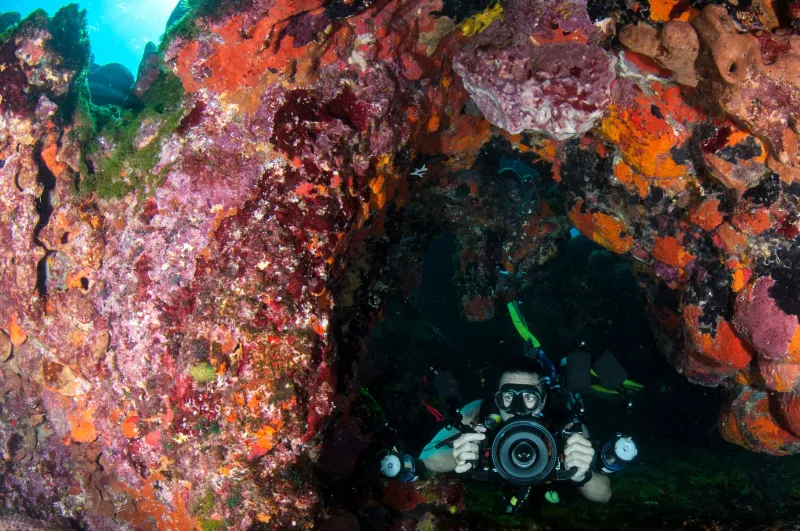
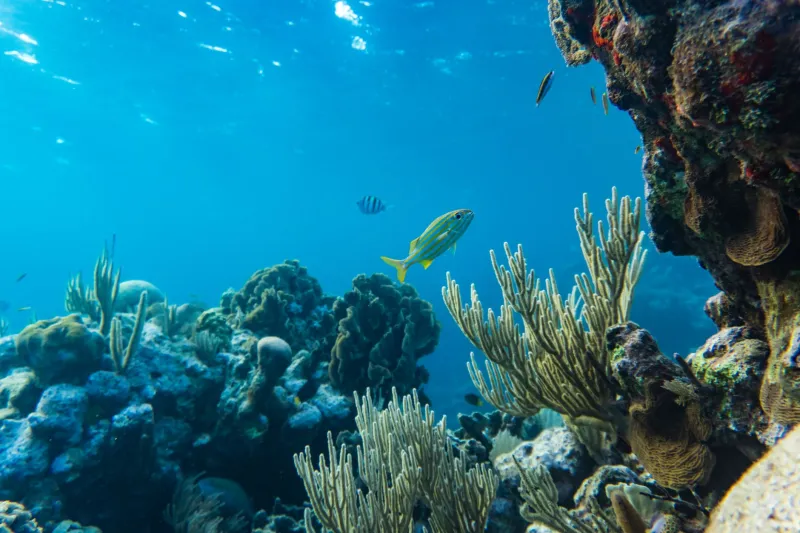
You know the feeling. You're hovering at 35 feet over a gorgeous section of reef in the Florida Keys, a sea turtle drifting past a fan coral in the background, and through your viewfinder everything looks absolutely cinematic. You fire the shot. You surface. You pull up the image on your laptop back at the dive shop, and somehow the whole thing looks like someone photographed a screensaver through a dirty window.
Your first instinct is to blame the gear. Maybe the port. Maybe the sensor. Maybe you need a new housing. But here's the thing: the physics were working against you long before you pressed the shutter, and no amount of new gear is going to fix a problem you don't understand yet.
Water Doesn't Just Get Things Wet — It Changes How Light Bends
Underwater, light refracts at the interface between water and your port glass, and again between the glass and the air inside your housing. That bending isn't uniform. It compresses apparent depth, makes objects look about 25% closer and larger than they actually are, and plays tricks on your brain's depth perception in ways your camera sensor is completely indifferent to.
Your eye, combined with your brain's incredible processing power, compensates for this in real time. You're essentially running a live correction algorithm every second you're underwater. Your camera is not. It captures exactly what the physics deliver to the sensor — which is a compressed, flattened version of the three-dimensional scene your brain was happily reconstructing for you.
The result? A shot that felt immersive and dynamic during the dive looks two-dimensional and lifeless on your monitor.
How Focal Length Makes This Worse (Or Better)
Here's where focal length enters the picture — and this is the part most underwater photography tutorials gloss over.
Wide-angle lenses, particularly anything in the 10-17mm range on a crop sensor or 14-24mm on full frame, are the go-to choice for reef photography for good reason. They let you get physically close to your subject while still capturing the surrounding environment. But underwater, that same wide-angle perspective interacts with water's refractive index in a way that can either work for you or completely against you depending on your distance from the subject.
Shoot too far away with a wide-angle lens and you're compounding two different kinds of compression: the optical compression from the water column and the perspective compression that comes from shooting a wide lens from a distance. The foreground and background elements collapse toward each other. Everything ends up looking like it's on the same flat plane.
Mid-range focal lengths — think 40-60mm equivalent — are often overlooked in underwater photography, but they can actually produce images that feel more spatially honest when shooting medium-sized subjects like individual coral heads or fish portraits. The perspective compression is less extreme, and the resulting image often translates more faithfully to a screen.
Longer focal lengths are a whole different conversation. In saltwater especially, shooting anything beyond 100mm equivalent means you're fighting particulate matter, color shift, and loss of contrast in a serious way. Freshwater environments — like the crystal-clear springs scattered across north-central Florida or Lake Tahoe's upper depths — give you better visibility and less particulate interference, so longer focal lengths stay usable at greater subject distances. Saltwater is less forgiving.
The Screen You're Looking at During the Dive Is Lying to You
Most underwater housings with monitors or built-in screens are showing you a preview that your eye interprets in the context of being underwater — in reduced ambient light, with your visual system already adjusted to the environment. It looks good down there because everything looks different down there.
Once you're topside and looking at the same image on a calibrated laptop monitor in daylight, the context changes completely. Your brain is no longer compensating for the underwater visual environment. Now it's just looking at a flat image and asking why it doesn't feel like anything.
This is why experienced underwater photographers develop the habit of mentally previewing how a composition will read on a flat screen before they shoot it — not just how it looks through the viewfinder at depth.
Practical Fixes That Actually Work
Get closer than feels comfortable. Seriously. The number one mistake underwater photographers make is shooting from too far away. Water eats contrast, color, and sharpness with distance. If you think you're close enough, halve the distance and shoot again. The image that reads as properly dimensional on a screen is almost always the one where the photographer was uncomfortably close to the subject.
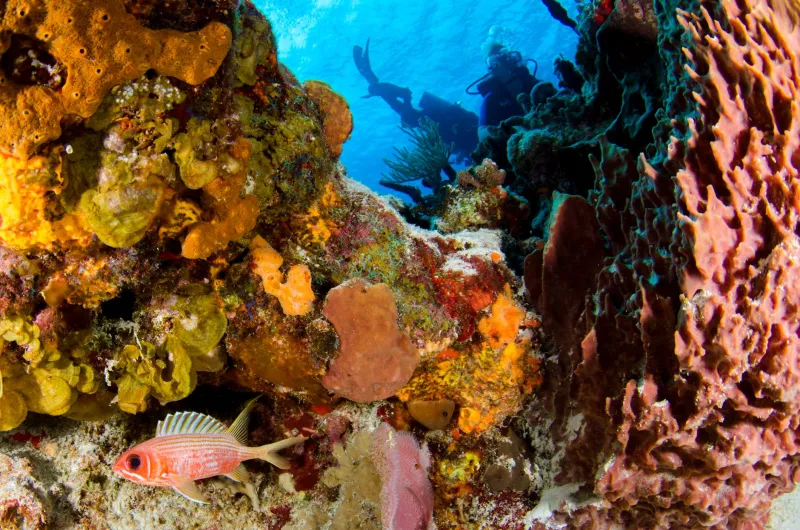
Create deliberate foreground interest. A flat reef shot with no foreground anchor looks flat because it is flat. Find a piece of coral, a cleaning station, a sea fan — something in the immediate foreground that gives your viewer's eye a place to enter the frame. That spatial layering is what signals depth on a two-dimensional screen.
Use your subject's position relative to the reef. A fish hovering six inches above the coral reads very differently than a fish photographed against open water. The reef texture behind and below your subject gives the image spatial context that translates to the screen.
Shoot with the sun angle in mind. Dappled light filtering through the water column from above creates visible depth cues — those shafts of light tell your viewer's brain that there's distance between the surface and the subject. Shooting with the sun directly overhead in flat, featureless light removes one of your best tools for communicating three-dimensional space.
Calibrate your monitor before you judge anything. This sounds basic, but you'd be surprised how many photographers are evaluating their underwater images on a laptop screen that's never been color-profiled. A properly calibrated display won't fix a compositionally flat image, but it will stop you from chasing problems that don't exist.
Freshwater vs. Saltwater: The Visibility Factor
This is worth a separate mention because the rules shift depending on where you're diving. In high-visibility freshwater environments — the springs in Ginnie Springs, Florida, or certain sections of Lake Superior — you can afford to shoot from greater distances and still get images that translate well. The water column isn't robbing you of contrast and color as aggressively.
In saltwater, especially in warmer, more biologically active coastal waters along the Gulf Coast or in tropical destinations, visibility can be genuinely challenging. The same composition that worked beautifully in a spring will look muddy and compressed in 20-foot visibility saltwater. You need to be even more aggressive about subject distance and foreground layering.
The Takeaway
The gap between what you see at depth and what appears on your screen isn't a gear problem — it's a physics problem with a compositional solution. Understanding how focal length interacts with water's optical properties, how your brain compensates for things your sensor doesn't, and how to build images that communicate depth on a flat screen will do more for your underwater photography than any new port or housing ever will.
Next time you're gearing up for a dive, think about the screen before you hit the water. Compose for the monitor, not the moment. The reef will still be beautiful — and so will the shot when you share it.