When Your Strobes Stop Listening: Fixing the Sync Problems That Are Killing Your Underwater Shots
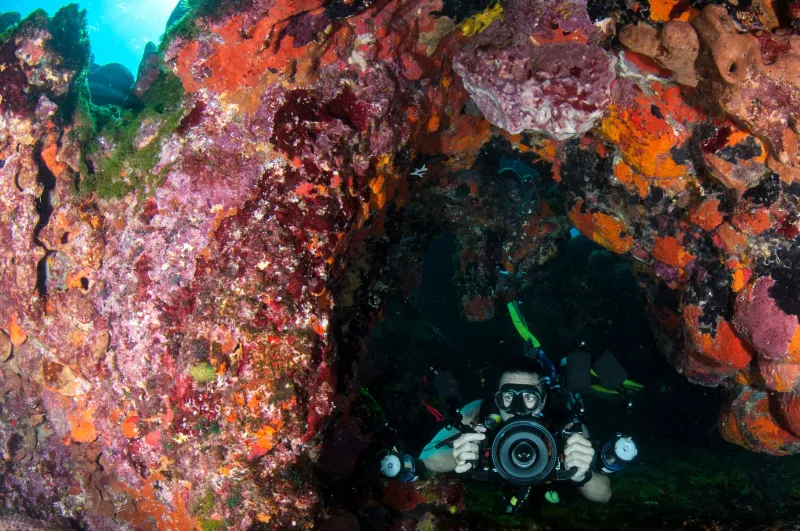
You're at 60 feet, a spotted eagle ray is gliding directly toward you, and you fire. The shutter clicks. The strobes don't. Or they do — but half a second too late, turning your best frame of the dive into a dark, muddy disappointment.
Strobe sync failures aren't rare. They're actually one of the most common technical complaints among underwater photographers at every level, from the weekend reef shooter to the seasoned pro on a liveaboard. And yet the conversation around them tends to stay pretty shallow. Most tutorials stop at "check your sync speed" and call it a day. That advice isn't wrong — but it's nowhere near the whole story.
Let's get into what's actually happening when your camera and strobes stop talking to each other.
The Sync Speed Problem (And Why It's Just the Beginning)
Every camera has a maximum flash sync speed — the fastest shutter speed at which the sensor is fully exposed when the shutter fires. Go faster than that, and you get a dark band across your image because the second shutter curtain starts closing before the first one fully opens. For most mirrorless and DSLR systems popular in underwater housings, that limit sits somewhere between 1/160s and 1/250s.
Underwater, you're often fighting ambient light from above, especially in shallow, sun-drenched water. The instinct is to push your shutter speed up to kill that background light. That instinct can easily push you past your sync ceiling without you realizing it, especially if you're shooting in a semi-automatic mode.
The fix sounds easy: stay under your sync speed. But the real problem is that sync speed is just the threshold — not the guarantee. Plenty of misfires happen well within the safe zone, and that's where things get genuinely complicated.
Sync Cables: The Weakest Link Nobody Wants to Talk About
If you're using fiber optic or electrical sync cables to trigger your strobes from inside a housing, you've introduced a physical failure point that lives in a harsh, wet environment. Saltwater, pressure cycling, repeated bending around port edges, and the occasional rough handling on a dive boat all degrade these cables over time — often invisibly.
Electrical sync cables are particularly vulnerable. Corrosion at the connector points is a slow killer. You might not see any visible damage, but the signal gets interrupted just enough to cause intermittent misfires. The strobe thinks it got a trigger signal. The camera thinks it sent one. The photo is dark anyway.
Fiber optic cables are more forgiving in salt environments since there's no electrical connection to corrode — but they have their own issues. A tight bend radius, a small nick in the casing, or even a dirty optical face at the connector can scatter the light signal enough to cause inconsistent triggering. Always inspect both ends of a fiber optic cable before a dive, not just the housing port side.
Practical rule: if you haven't replaced your sync cable in two or three seasons of regular saltwater diving, do it now. They're inexpensive insurance against lost shots.
Wireless Triggers: More Complicated Than the Marketing Suggests
Wireless strobe triggering systems have gotten genuinely better over the past few years, and the appeal is obvious — no cables to route through the housing, no corrosion points, cleaner rig setup. But underwater wireless triggering comes with real caveats that don't always make it into the product descriptions.
Most underwater wireless systems use optical (light-based) triggering rather than radio frequency, because RF signals don't travel well through water at short range. Optical systems work by having the camera's built-in flash or a dedicated optical trigger fire a brief pulse that the strobe's sensor picks up. The problem? Optical signals are directional. If a strobe is positioned at an angle where its sensor isn't pointing toward the trigger source, you get a miss. Water turbidity, particulate, and even the angle of your rig arms can all interfere.
There are radio-based underwater systems, but they're expensive and require careful setup. If you're investing in wireless, make sure you understand the operating range, the sensor placement requirements for your specific strobes, and how the system behaves in murky or silty water. What works beautifully on a clear Caribbean reef might fail constantly in the low-visibility kelp forests off the California coast.
Why "Correct Settings" Still Produces Misfires
Here's the scenario that drives underwater photographers crazy: everything is set right, the sync speed is fine, the cable looks good, and the strobes still fire inconsistently. What gives?
A few culprits worth investigating:
Strobe recycle time. If you're shooting a burst or firing quickly between frames, your strobe may not have fully recycled before the next shutter fires. The strobe technically fires — but at reduced power, or not at all. Check your recycle time in the spec sheet and slow down between shots during fast action sequences.
TTL communication lag. Through-the-lens (TTL) metering involves a pre-flash that measures the scene before the main exposure. In some camera-strobe combinations, particularly when mixing brands, the timing of that pre-flash sequence doesn't align properly with the strobe's trigger circuit. The result is a strobe that fires on the pre-flash instead of the main exposure — or misses both. Switching to manual strobe power often resolves this entirely.
Housing-specific shutter lag. Some housing systems introduce a tiny delay between when you press the shutter button and when the camera actually fires. On land, this is unnoticeable. When you're trying to sync a strobe at 1/200s, even a few milliseconds of lag can matter. If you've upgraded to a new housing and suddenly have sync issues you never had before, this is worth investigating.
A Systematic Troubleshooting Approach
Rather than swapping gear at random, work through sync problems methodically:
-
Test in a controlled environment first. Fill a bathtub or pool and fire a series of test shots at various shutter speeds. Note exactly where misfires start. This tells you whether you have a sync speed issue or something else.
-
Isolate the cable. Swap in a known-good sync cable and retest. If misfires disappear, you found your problem.
-
Switch to manual strobe power. If you're using TTL, go manual and see if consistency improves. A lot of photographers find manual more reliable underwater anyway.
-
Test one strobe at a time. If you're running dual strobes, disconnect one and see if the remaining unit fires reliably. Then switch. This helps identify if one strobe is the problem.
-
Check your housing manual for known compatibility notes. Some housings have documented limitations with specific strobe brands or trigger systems. This information is sometimes buried in the FAQ section of manufacturer websites.
The Bigger Picture
Strobe synchronization is one of those topics that rewards patience and systematic thinking more than instinct. The underwater environment is genuinely hostile to electronics and optical systems — salt, pressure, temperature swings, and physical stress all conspire against clean, consistent communication between your camera and your lights.
The photographers who get it consistently right aren't necessarily using the most expensive gear. They're the ones who understand their system well enough to know exactly where it can fail, and they maintain and test their equipment before it becomes a problem at depth.
Take the time to know your sync chain from button to bulb. Your lighting — and your dive logs — will thank you.