Mirrorless vs. DSLR Underwater: Why the Old Guard Is Running Out of Time
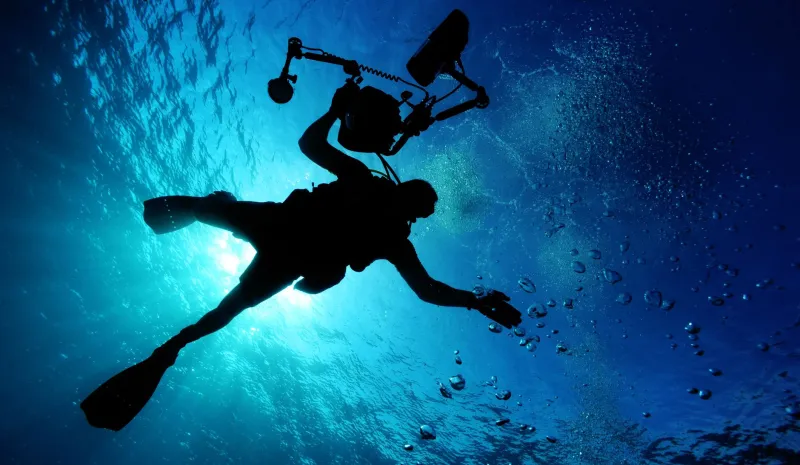
There's a certain kind of underwater photographer who swears by their DSLR rig. They've got a housing that cost more than their first car, a port system dialed in after years of trial and error, and a workflow so refined they could swap lenses blindfolded on a rocking boat. Respect. Seriously.
But here's the uncomfortable truth: the industry has moved on. And the gap between mirrorless and DSLR technology — already significant on the surface — gets even wider the moment you drop below the waterline.
What Actually Changes When You Go Underwater
On dry land, the mirrorless-versus-DSLR debate is mostly about ergonomics, battery life, and brand loyalty. Underwater, the physics of the environment force a completely different set of priorities to the top of the list.
Light drops fast. Contrast disappears. Particles in the water scatter your autofocus points. Subjects move without warning. Your reaction time is slower than you think. Every one of those factors plays directly into mirrorless's strongest advantages.
DSLR autofocus systems were designed around phase-detection sensors located in a dedicated module separate from the main imaging sensor. That architecture works brilliantly in bright, high-contrast conditions. Underwater, where you're often shooting in low ambient light with a subject that blends into a busy reef background, that same system starts to struggle. It hunts. It hesitates. It nails the coral two inches behind the nudibranch you actually wanted.
Mirrorless cameras put phase-detection pixels directly on the imaging sensor itself — sometimes across nearly the entire frame. The result is autofocus that's faster, more confident, and far better at locking onto subjects in challenging light. Sony's a7R V, the Nikon Z8, and Canon's R5 C all demonstrate what that means in practice: subject tracking that sticks to a sea turtle through a full turn, eye-detection that finds a fish face even when it's partially obscured by coral.
The Housing Situation Is Getting Interesting
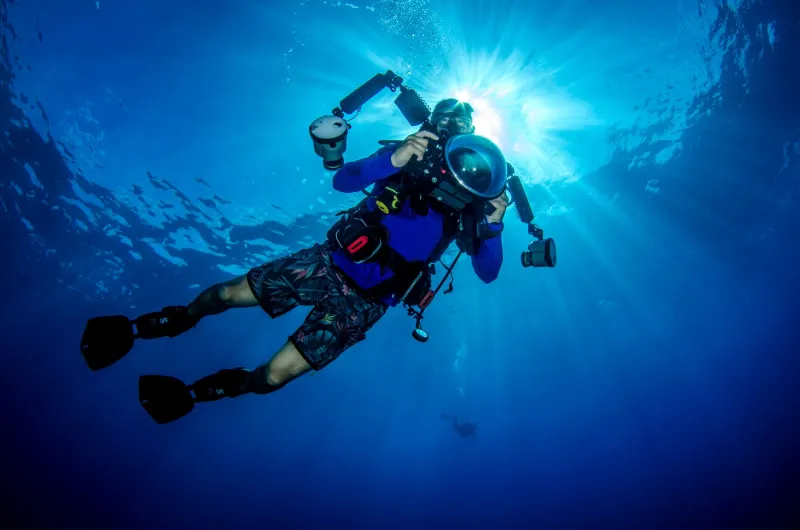
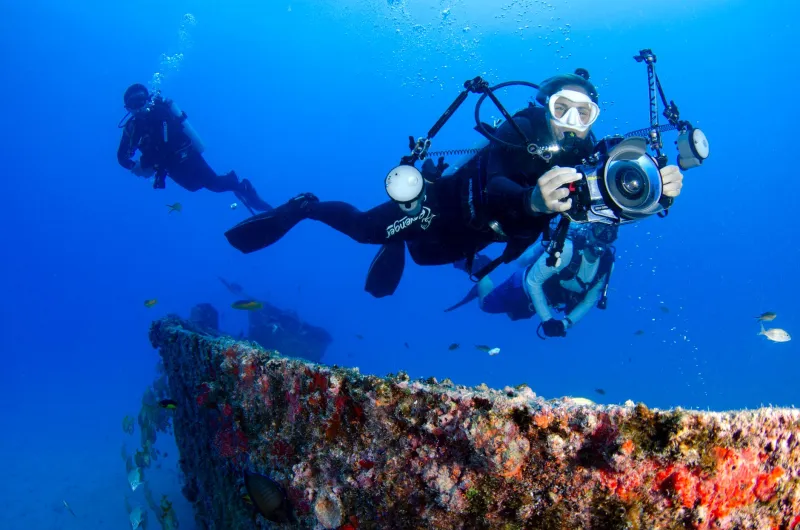
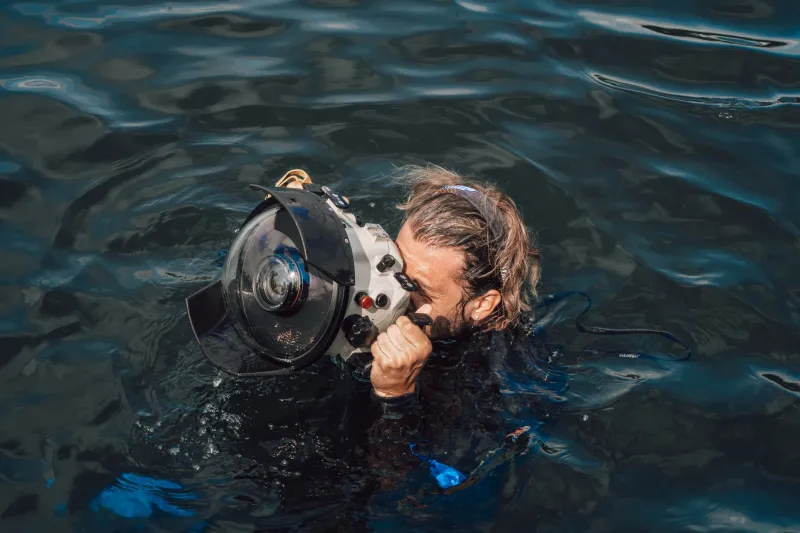
Here's where things get genuinely disruptive for established shooters. DSLR housings are big. They have to be — the mirror box and optical viewfinder require physical space that can't be engineered away. That size translates directly into drag underwater, which means more physical effort to hold a steady shot and more fatigue over a long dive.
Mirrorless bodies are fundamentally more compact. The housings built around them reflect that. Nauticam's housing for the Sony a7 IV, for instance, is noticeably smaller and lighter than a comparable DSLR setup without giving up a single optical port option. Ikelite, Aquatica, and Sea & Sea have all invested heavily in mirrorless-specific designs over the past few years, and the results are housings that are easier to travel with, easier to balance in the water, and — in many cases — less expensive to manufacture because there's simply less material involved.
For photographers who travel to dive destinations like the Florida Keys, Hawaii, or the Channel Islands, that size reduction matters more than it might seem. Airlines are not getting more generous with luggage allowances.
Who Should Actually Make the Switch Right Now
If you're a working underwater photographer — someone shooting for publications, tourism operators, or conservation organizations — the case for switching is already closed. The image quality ceiling on current mirrorless systems is higher than what most DSLRs can reach, the autofocus performance in difficult conditions is measurably better, and manufacturers are concentrating their lens development almost entirely on mirrorless mounts. Canon's EF lens roadmap is essentially frozen. Nikon's F-mount is in the same position. The future is electronic viewfinder territory, full stop.
If you're a serious recreational shooter who's happy with your current results, the calculus is different. A well-tuned DSLR rig with a good port system can still produce stunning images. The question isn't whether your current setup is broken — it's whether the next time you need to replace or upgrade a major component, the investment makes sense given where the industry is headed.
Spare parts, replacement ports, and manufacturer support for older DSLR housings will eventually become harder to find. That's not a scare tactic; it's just how product cycles work.
The Real Cost of Switching (And Where You Can Soften the Blow)
Let's be honest about the financial reality. If you've got a Canon 5D Mark IV in a Nauticam housing with a full port kit, switching to an R5 doesn't mean you just swap the body. You're likely looking at a new housing, new port adapters, and potentially new glass if you want to take advantage of RF-mount optics. That's a significant investment.
A few things work in your favor, though. The used market for mirrorless housings is maturing fast, which means you can find solid second-hand options from photographers who upgraded to the latest body. Some housing manufacturers — Nauticam is a good example — have designed their systems with enough modularity that certain port components carry over between generations. It's worth calling your preferred housing brand directly before assuming you're starting from scratch.
Renting before buying is also genuinely smart here. Outfits like Reef Photo & Video and Backscatter both offer mirrorless rental packages that let you put a Sony or Nikon Z system through its paces on an actual dive trip before you commit.
Which Mirrorless Systems Are Worth Your Attention
For stills-focused shooters, the Sony a7 IV and a7R V sit at the top of most recommendation lists for a reason. The autofocus is exceptional, the sensor performance in low light is class-leading, and the housing ecosystem around Sony's full-frame E-mount is the most developed in the mirrorless underwater world right now.
Nikon's Z system — particularly the Z8 — has won over a lot of former Nikon DSLR users who didn't want to abandon their glass. An FTZ adapter lets you use existing F-mount lenses in the housing, which softens the transition cost considerably.
For video-heavy work, Canon's R5 C and the newer R5 Mark II are hard to beat. Dual-native ISO, excellent color science straight out of camera, and Canon's Dual Pixel autofocus system translate remarkably well to underwater video scenarios.
Action cam users and entry-level shooters aren't left out either. The GoPro Hero 13 Black and DJI Osmo Action 4 both represent mirrorless-adjacent technology — no mirror, electronic shutter, compact form — and they're already in the water with millions of divers who never owned a DSLR in the first place.
The Transition Is Already Happening
Walk the dock at any serious dive operation along the California coast or in the Florida Keys and count the DSLRs versus mirrorless rigs. The ratio has shifted dramatically in the past three years. Underwater photography instructors who used to recommend Canon Rebels and Nikon D500s as starter systems are now pointing students toward Sony ZV-E10s and Olympus Tough cameras with electronic shutters.
The mirror is, somewhat poetically, going away. Your DSLR housing isn't worthless tomorrow — but if you're planning your next major gear investment, building around a mirrorless system isn't just forward-thinking. At this point, it's the only direction that makes practical sense.