Think Small: How Macro Photography Transforms the Way You See the Reef
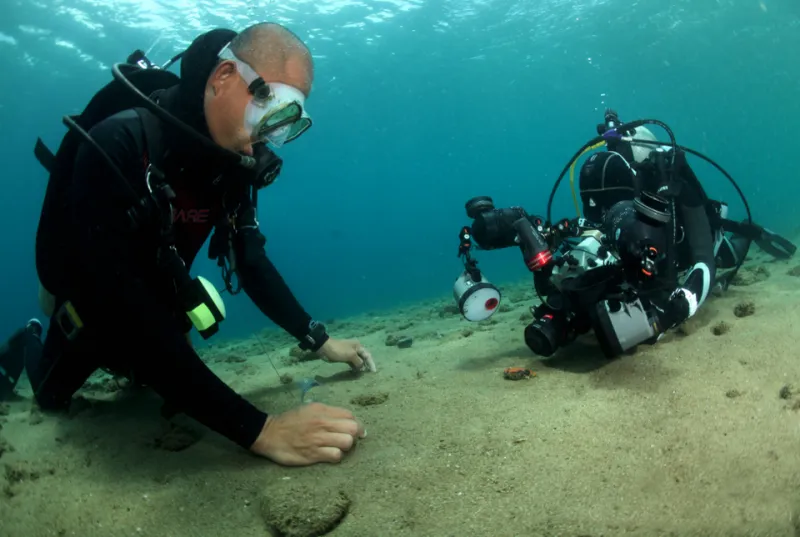
Photo: Jun V Lao, CC BY-SA 4.0, via Wikimedia Commons
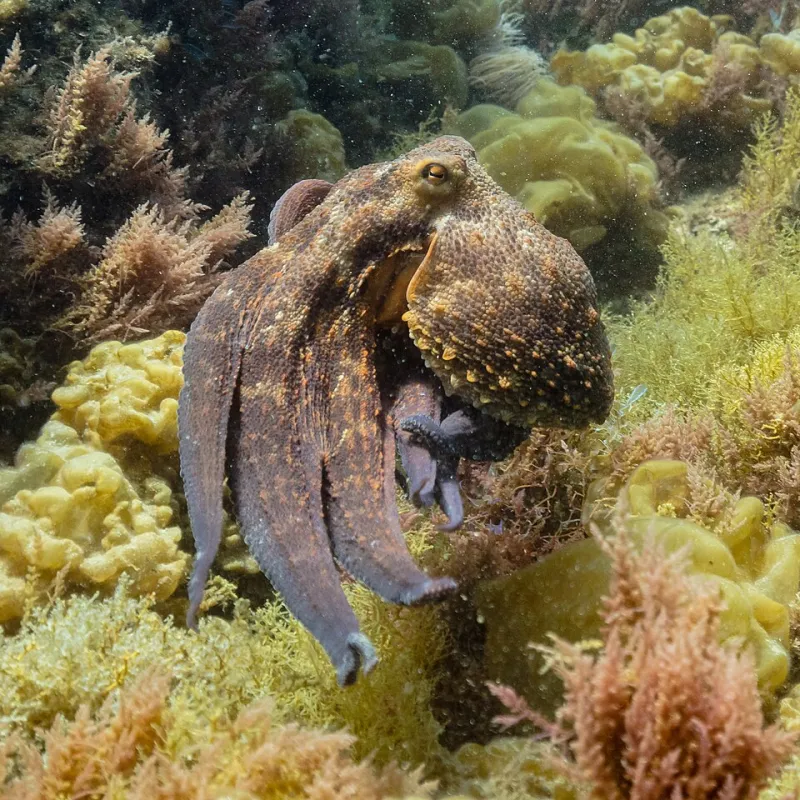
Every diver has seen the shot: a diver silhouetted against a sunlit reef, arms wide, coral stretching into the distance. It's beautiful. It's also everywhere. What you see far less often — and what tends to stop people mid-scroll — is a pygmy seahorse clinging to a sea fan, its body a perfect camouflage of pink and white bumps. Or the alien geometry of a nudibranch's cerata. Or the moment a mantis shrimp stares directly into your lens like it's already won the fight.
Macro underwater photography is the art of getting close — really close — and it has a way of making divers fall in love with the reef all over again.
What Makes Underwater Macro Different from Land-Based Close-Up Work
Macro photography on land is already a patience game. Underwater, the challenge multiplies. You're neutrally buoyant, which means any movement — breathing, a slight fin kick, a current nudge — translates directly into camera shake. Your subject might be a tiny creature on a moving piece of coral. Your light source is somewhere behind and above you, not in your hand. And you have a finite amount of air to figure all of this out.
The physics of water add another layer. Light behaves differently the closer you get to a subject. Backscatter — those distracting white particles that look like snow in underwater photos — is a constant threat, and it gets worse the more powerful your strobes are at close range. Water absorbs and scatters light so aggressively that by the time you're shooting at 60 feet, you've lost virtually all red and orange wavelengths from ambient light. At macro distances, you're almost entirely dependent on artificial lighting.
All of this sounds like a lot of bad news. It's actually the opposite. These constraints are precisely what make macro underwater work so rewarding when you get it right.
The Gear That Makes It Happen
You don't need a massive investment to start shooting macro underwater, but a few pieces of kit make a significant difference.
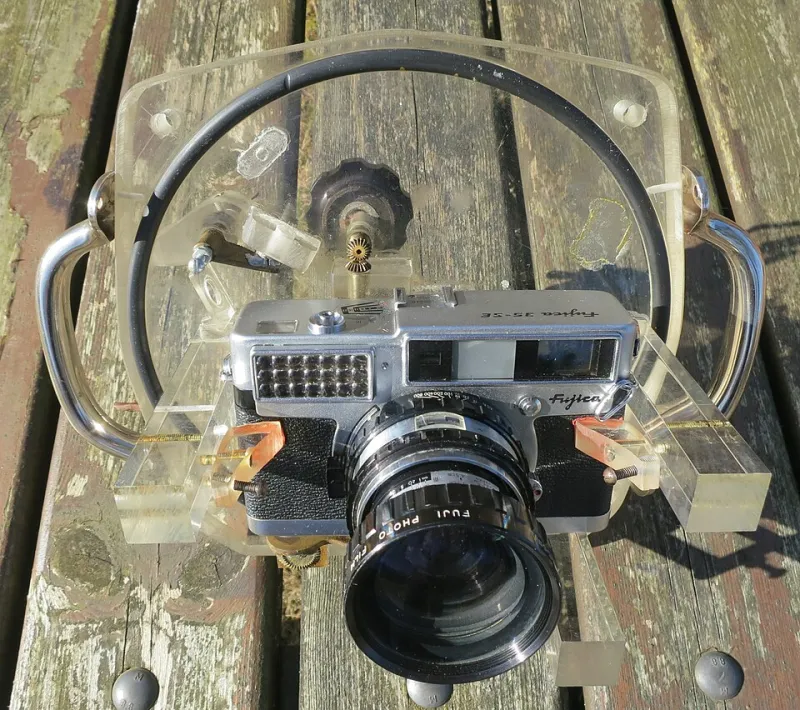
Macro lenses and wet lenses. A dedicated macro lens — something like a 60mm or 100mm equivalent — is the gold standard for mirrorless and DSLR underwater rigs. These lenses allow you to focus at short distances while maintaining enough working distance between your port and the subject to avoid spooking it. For compact camera shooters, a wet macro lens (a clip-on diopter that attaches to the outside of your housing port) is a cost-effective way to get into the discipline without rebuilding your entire kit.
Strobes positioned for close work. Wide-angle underwater photography typically calls for strobes positioned wide and slightly behind the dome port. Macro work is almost the opposite — you want your light sources closer in, angled carefully to illuminate a tiny subject without blowing out highlights or flooding the frame with backscatter. Many macro photographers use a single strobe positioned to one side to create natural-looking shadow and depth, rather than the flat, even lighting that two strobes can produce.
A focus light. At macro distances in low ambient light, autofocus systems can hunt. A small LED focus light — not your primary strobe, but a constant-on beam — gives your camera's AF system something to lock onto and lets you see the subject clearly before committing to the shot.
A sturdy but sensitive hand position. This isn't gear in the traditional sense, but your technique for holding the housing matters enormously. Many macro shooters brace two fingers against the reef (gently, non-destructively — always check what you're touching) to stabilize the camera at close range. Others use a single-hand grip with the elbow tucked to create a human monopod.
Finding Subjects: The Macro Mindset
Here's something wide-angle photographers often miss: the reef is absolutely teeming with macro subjects, and most divers swim right past them.
Slowing down is the first skill to develop. A diver covering 50 feet of reef in 10 minutes will see the big picture but miss the details. A macro photographer covering 10 feet in 10 minutes might find a cleaner shrimp station, a pair of juvenile fish sheltering in an anemone, a flatworm gliding across a coral head, and a crab tucked under a ledge — all within arm's reach of each other.
Look at transitions. The edge between a sandy bottom and a coral head is prime macro territory. So is the underside of ledges, the inside of barrel sponges, and the base of sea fans. In Florida waters, the seagrass beds of the Keys are extraordinary macro environments — pipefish, juvenile filefish, and seahorses all use that habitat.
Learn to recognize the signs of small life before you see the animal itself. A nudibranch leaves a faint mucus trail on a coral surface. A tiny fish that keeps darting back to the same spot on a coral head is probably defending eggs. A cleaner shrimp will often wave its antennae from a fixed position, advertising its services.
Lighting: The Make-or-Break Variable
Getting light right at macro distances is genuinely one of the harder skills in underwater photography, and it's also one of the most satisfying to master.
The core challenge is that your strobes are physically larger than your subject. A strobe head that's 4 inches across lighting a nudibranch that's 1 inch long is like using a floodlight to illuminate a postage stamp. The light wraps around the subject, spills everywhere, and produces flat, uninspiring results.
Solutions include using diffusers on your strobes to soften the output, positioning a single strobe to create directional light that reveals texture, or — for the most controlled results — using a snoot. A snoot is a tube or cone that attaches to your strobe and collapses the beam into a narrow spotlight. Snooted macro shots have a distinctive look: the subject is brilliantly lit against a completely black background, which isolates the animal and creates a dramatic, almost studio-quality effect. It's a technique worth experimenting with once you're comfortable with basic macro exposure.
Why Macro Changes Everything
Photographers who make the shift from wide-angle to macro almost universally describe it as a perspective reset. When you spend a 45-minute dive focused on a 12-inch patch of reef, you start noticing ecological relationships that are invisible from a distance — cleaning behavior, predator-prey dynamics, the way juvenile fish use specific coral structures for shelter.
That intimacy translates into images that tell stories. A wide-angle shot of a reef is beautiful. A macro shot of a mantis shrimp mid-strike, or a pair of clownfish guarding eggs on an anemone base, is a narrative. It pulls viewers in not because of scale, but because of specificity.
Start small. Pick one dive and commit to staying in a 10-foot radius. Move slowly. Breathe steadily. And see what the reef looks like when you actually stop to look at it.