Your Camera Says 300 Feet. Should You Actually Go There?
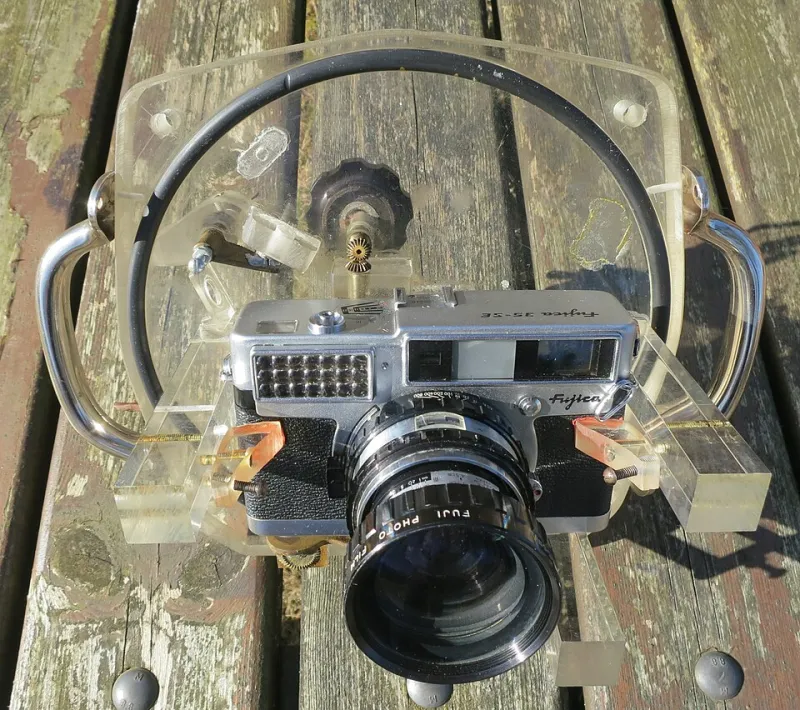
Photo: R. Henrik Nilsson, CC BY 4.0, via Wikimedia Commons
There's a moment most underwater photographers recognize: you're gearing up on the boat, double-checking your housing O-rings, and you catch yourself thinking, this thing is rated to 300 feet — I'm only going to 60, so I'm totally fine. That logic feels solid. It usually holds. But it glosses over a surprisingly complex relationship between manufacturer specs, real-world physics, and the kind of failure modes nobody puts in the product description.
Let's unpack what depth ratings actually mean, where the margins live, and how to match your gear to your certification level without gambling your equipment — or your safety — on a number printed on a spec sheet.
What "Rated to X Feet" Actually Means
Manufacturers test housings and waterproof cameras under controlled static conditions. A housing rated to 200 feet (roughly 60 meters) has been pressure-tested in a lab environment — usually in a pressurized tank with no movement, no temperature variance, and no O-ring that's been in a gear bag for eight months.
Real diving is none of those things.
Water pressure increases by about 0.445 PSI per foot of seawater. At 100 feet, your housing is dealing with roughly 44.5 PSI of external pressure on top of surface atmospheric pressure. That's manageable for a well-designed housing. But throw in a rapid descent, cold water that causes O-rings to contract, or a hair-thin piece of sand caught in the seal, and the margin between "rated depth" and "flooding depth" shrinks fast.
Most reputable housing manufacturers — Ikelite, Nauticam, Sea & Sea, and others — build in a safety factor, typically 1.5x to 2x the rated depth. So a housing advertised at 200 feet might actually survive 300 to 400 feet before catastrophic failure. The problem is that safety factor isn't published, isn't guaranteed, and isn't consistent across budget versus professional-grade gear.
The Pressure Is More Than Just Numbers
Pressure doesn't just threaten seals. It affects your camera's internal components in ways that aren't always visible until it's too late.
Polycarbonate and acrylic ports flex under pressure. At depth, a dome port can micro-deform enough to affect autofocus performance or, in extreme cases, allow moisture ingress at the port-to-housing junction. Flat ports are generally stiffer, but the trade-off is distortion in wide-angle shots — a whole separate conversation.
Electronics inside the housing can also behave unexpectedly. Batteries discharge faster in cold water. LCD screens may dim or lag. Buttons with rubber gaskets can become stiff or unresponsive. None of this equals flooding, but it does equal a frustrating dive and potentially missed shots.
Then there's the temperature factor. O-rings are typically made from nitrile or EPDM rubber. Cold water — say, diving a Great Lakes wreck in Michigan or a Northern California kelp forest — causes these seals to contract slightly. That contraction can open micro-gaps that simply don't exist in the warm water where your housing was assembled and tested. This is why many experienced underwater photographers carry a small tube of silicone grease and re-lube O-rings before cold-water dives, even if they did it the night before.
Case Studies in Flooding: What Actually Goes Wrong
Flooded housings are more common than the community likes to admit. A few patterns show up repeatedly in forums like Wetpixel and DPReview's underwater photography threads:
The hair-in-the-O-ring failure. A single strand of hair, a grain of sand, or a fiber from a lens cloth caught in the main O-ring groove is enough to break the seal under pressure. This is the most preventable failure mode, and it still takes out cameras every season.
The exceeded-depth failure. A diver following a drift at depth, distracted by a whale shark, descends 30 feet deeper than planned. A housing rated to 130 feet hits 170. The housing survives, but the port seal doesn't. This happens more often on liveaboard trips where diver profiles are aggressive and distractions are plentiful.
The aging-seal failure. O-rings have a service life. Many manufacturers recommend replacing them annually or every 100 dives, whichever comes first. A lot of photographers don't track this. An O-ring that looks fine visually can have developed micro-cracks that only become a problem under sustained pressure.
The user-assembly failure. Rushing housing assembly on a rocking boat is a recipe for misaligned seals. The camera goes in, the back snaps shut, and nobody notices the seal didn't seat properly until 80 feet down.
Matching Your Gear to Your Certification
Here's a practical framework for thinking about depth ratings relative to where you're actually diving:
Open Water certified (max 60 feet/18 meters): Almost any consumer waterproof camera or entry-level housing is technically sufficient at this depth. That said, the 30-foot margin between your cert limit and most budget housings' rated depth (typically around 100 feet) is comfortable but not infinite. Stick to well-maintained gear and inspect O-rings every single dive.
Advanced Open Water (max 130 feet/40 meters): Now you're in territory where budget gear starts to feel less reassuring. At 130 feet, you want a housing rated to at least 200 feet from a manufacturer with a track record. This is the sweet spot for mid-range aluminum housings from brands like Ikelite or Fantasea.
Technical/trimix divers (130+ feet): If you're going deeper than recreational limits, you need a housing explicitly rated for those depths, ideally from a manufacturer like Nauticam or Subal that caters to professional and technical applications. At these depths, the consequences of flooding aren't just expensive — they're potentially dangerous, as a flooded housing can become a distraction during a decompression obligation.
The 80% Rule Nobody Talks About
A practical rule circulating among experienced underwater photographers: never take your housing below 80% of its rated depth on a regular basis. Reserve the remaining 20% as your emergency margin for drift dives, unexpected descents, and the general unpredictability of open water.
If your housing is rated to 200 feet, plan your dives around a personal limit of 160 feet. It's conservative. It's also the kind of conservatism that keeps your gear — and your underwater photography career — intact for the long haul.
Before You Descend
Regardless of your depth rating, a pre-dive housing check should be non-negotiable. Clean and inspect every O-ring. Verify all port locks and latches are engaged. Submerge the housing in a bucket of fresh water for two minutes before entering the ocean — any bubbles indicate a leak you want to find on the surface, not at 80 feet.
Depth ratings are a starting point, not a permission slip. The best underwater photographers treat their housings with the same respect they give their regulators: as life-support equipment that deserves careful, consistent maintenance and a healthy margin for error.