Fog Before the First Bubble: The Real Science of Housing Condensation (And What Actually Prevents It)
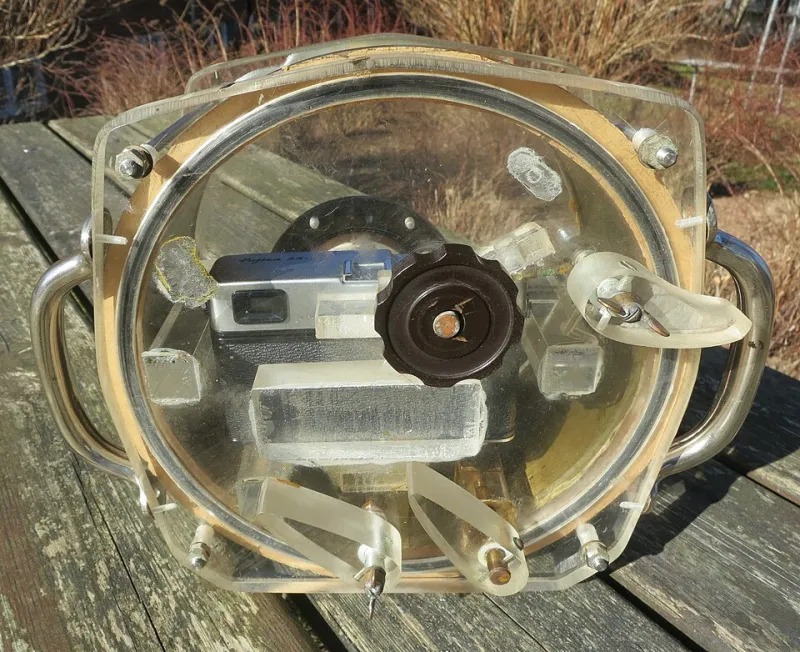
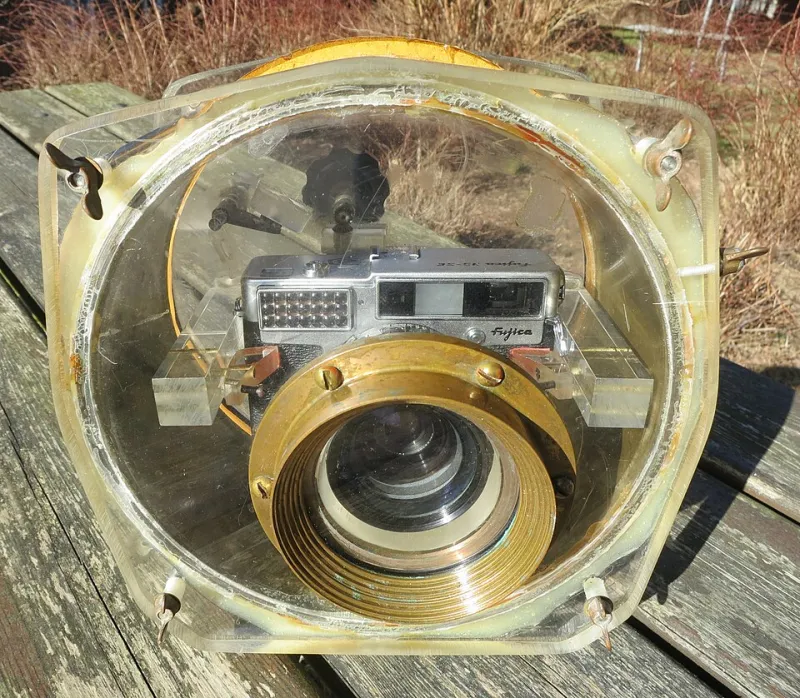
Photo: R. Henrik Nilsson, CC BY 4.0, via Wikimedia Commons
You've done everything right. Cleaned the port, lubed the O-ring, checked the seals twice. You roll off the boat, descend to the reef, frame up a gorgeous shot of a spotted eagle ray — and the image looks like someone smeared Vaseline on your lens. Fogged. Completely fogged. And you're 50 feet down with no way to fix it.
Here's the thing nobody tells you when you're starting out: that fog didn't happen underwater. It happened in your camera bag, on the dive boat, or at the rinse station. The ocean just revealed the problem.
Let's break down what's actually going on — and more importantly, how to stop it.
What Fogging Actually Is (And Why Nitrogen Flushing Doesn't Fix It)
Condensation inside a housing forms the same way it does on a cold glass of sweet tea on a humid Florida afternoon. When warm, moisture-laden air contacts a cooler surface, the water vapor in that air drops below its dew point and turns into liquid droplets. Inside your housing, the "cold surface" is typically the front element of your lens or the interior of your port — both of which cool faster than the trapped air once you submerge.
So where does the nitrogen flush myth come in? The idea sounds logical: swap out the humid air inside your housing with dry nitrogen gas, and there's no moisture to condense. Some manufacturers even sell nitrogen flush kits and recommend the practice.
The problem? Unless you're doing this in a controlled environment with a verified dry nitrogen source and you're sealing the housing immediately in that same environment, you're almost certainly trapping some ambient humidity anyway. And in places like Hawaii, the Florida Keys, or the Gulf Coast — where relative humidity regularly runs above 75% — even a few seconds of exposure while you're fiddling with your camera can re-introduce enough moisture to fog your port at depth.
Nitrogen flushing isn't useless, but it's not the silver bullet the dive community treats it as. It's a partial solution being sold as a complete one.
The Humidity-Temperature Gap Is Your Real Enemy
Here's the physics you actually need to understand. The interior of your housing is a closed system. Whatever humidity exists in that air when you seal it up is what you're diving with. When you enter water that's cooler than the air temperature — which is almost always the case on a tropical dive — the housing walls and port cool rapidly. The air inside? It cools more slowly.
That temperature differential is everything. The greater the gap between the air temperature when you sealed the housing and the water temperature you're diving in, the more likely condensation becomes. A housing sealed in an 85°F, 80% humidity environment and then plunged into 72°F water is basically a fog machine.
This is why photographers diving in California's cooler Pacific waters sometimes have fewer fogging issues than their counterparts in the Caribbean — the temperature swing is smaller, and the humidity at the surface can actually be lower in coastal California than in the tropics.
What Silica Gel Alone Gets Wrong
Silica gel packets are a staple recommendation in underwater photography forums, and they do work — partially. Silica gel absorbs moisture from the air inside your housing, reducing the relative humidity of that trapped air. Less humidity means less condensation potential. Simple enough.
The catch is capacity and saturation. A standard silica gel packet has a finite absorption limit. If you're sealing your housing in a humid boat cabin and tossing in a packet that's been sitting in your gear bag for three dives, it may already be saturated and doing essentially nothing. Silica gel also can't compensate for a large volume of moist air — it's a support measure, not a standalone fix.
Using silica gel is smart. Relying on it exclusively is how you end up with a fogged port at depth.
The Pre-Dive Protocol That Actually Works
The photographers who rarely deal with fogging aren't doing anything exotic. They're controlling the environment in which they seal their housings. Here's the step-by-step approach that holds up in real field conditions:
Step 1: Assemble in the coldest, driest environment available. If you're on a liveaboard in the Bahamas, the air-conditioned salon is your friend. Assemble and seal your housing there, not on the sun-baked dive deck. The goal is to minimize the humidity of the air you're trapping inside.
Step 2: Use fresh, properly regenerated silica gel. Regenerate your silica gel packets in an oven at around 250°F for a couple of hours before your trip. Use indicating silica gel (the kind that changes color when saturated) so you actually know when it needs refreshing. Drop one or two packets inside before sealing.
Step 3: Seal quickly and deliberately. Every second your housing is open on a humid dive deck is a second moisture is moving in. Have your camera ready, drop in the silica, and close it up. Don't let it sit open while you chat with your dive guide.
Step 4: Let the sealed housing equilibrate. Here's the step most people skip: once sealed, let your housing sit in the air-conditioned environment for 15-20 minutes before heading to the water. This gives the silica gel time to start working and allows the internal temperature to stabilize. You're reducing the thermal gap before you even hit the water.
Step 5: Avoid direct sun on the housing pre-dive. Sitting your housing on a hot dive deck in direct sunlight heats the interior air, raises its capacity to hold moisture, and sets you up for condensation when that now-super-humid air hits cooler water. Keep it in shade or indoors until you're ready to enter.
Equipment Worth Having
A few tools make this protocol easier to execute consistently:
- Indicating silica gel packets (2-5 gram size): Look for ones that turn from blue to pink when saturated. Brands like Dry-Packs are widely available on Amazon and easy to regenerate.
- A small hygrometer: Some photographers drop a mini digital hygrometer inside their housing to actually measure the humidity before sealing. If it reads above 50%, keep the housing open and let the silica work longer.
- A soft-sided cooler or insulated bag: Useful for keeping your sealed housing at a stable temperature between the salon and the water, especially on hot-deck situations.
When Fogging Happens Anyway
Even with the best protocol, occasionally you'll surface with a fogged port. Your immediate move: get the housing into air conditioning, open it carefully, swap in fresh silica, and give it 30 minutes before resealing. Don't shake it. Don't blow into it. Don't use a hair dryer near the O-ring grooves.
And document your conditions — air temp, water temp, relative humidity if you have it. Over a few trips, patterns emerge. You'll learn exactly how much silica you need in the Florida Keys versus Monterey, and you'll stop losing shots to a problem that starts on land.
The reef isn't going anywhere. Your fog problem, with the right approach, absolutely can.