Depth Ratings Are Marketing, Not Math: What Your Housing's Numbers Actually Mean
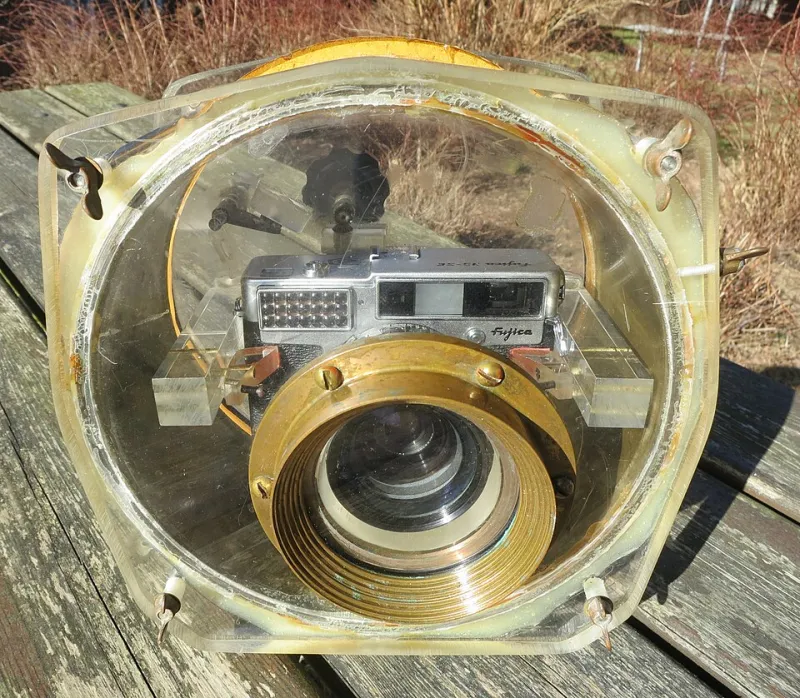
Photo: R. Henrik Nilsson, CC BY 4.0, via Wikimedia Commons
You bought a housing rated to 200 feet. You're planning a 180-foot dive. Math checks out, right?
Not quite.
The depth rating printed on your housing box — or buried in the spec sheet — is one of the most misunderstood numbers in underwater photography. Divers treat it like a hard ceiling, a guaranteed safe zone, a promise. But it's really more of a starting point for a longer conversation about physics, manufacturing tolerances, and the specific conditions of your next dive.
Let's unpack what that number actually means, why two housings with identical ratings aren't necessarily equal, and how to think more clearly about your real-world limits.
How Manufacturers Test (And Why They Don't All Do It the Same Way)
Here's the uncomfortable truth: there is no single universal standard for how underwater camera housings are depth-rated in the United States. Some manufacturers test to ISO 6425, which is primarily a watch-testing standard but gets borrowed by housing makers. Others use internal hydrostatic pressure testing. Some test with a static water column. A few test with pressurized air chambers instead of water — which behaves differently under compression.
What this means in practice is that a housing rated to 200 feet by one brand might have been tested under significantly more rigorous conditions than a competitor's housing carrying the same number. Or vice versa. You simply can't compare ratings across brands the way you'd compare megapixel counts.
Most reputable manufacturers apply a safety factor — typically somewhere between 1.5x and 3x — meaning a housing rated to 200 feet may have been tested to 300 or even 600 feet before it failed or showed signs of stress. But that safety margin is their internal calculation, based on a new housing, in controlled lab conditions, with fresh seals and no previous dive history.
Your housing, sitting in a gear bag that's been through thirty dives in warm Caribbean water, is a different animal entirely.
The Variables That Quietly Shrink Your Real-World Limit
Temperature
Cold water is denser than warm water, which means it exerts slightly more pressure at equivalent depths. A dive to 130 feet in the cold waters off Monterey, California is not the same pressure experience as a 130-foot dive in the warm waters of the Florida Keys. The difference is modest — a few PSI — but it's real, and it compounds with other variables.
More importantly, cold temperatures cause O-rings and seals to contract. A housing that sealed flawlessly in 80°F Caribbean water may behave differently on a Pacific Northwest dive where water temps hover in the low 40s. Seal materials matter here — standard nitrile O-rings are more vulnerable to cold-induced contraction than EPDM or silicone alternatives. Check what your housing uses and what its rated temperature range actually is.
Salinity
Saltwater is denser than freshwater, so the pressure at a given depth is measurably higher in the ocean than in a freshwater lake or quarry. If you've been testing your housing in a freshwater training environment and assuming ocean performance will be identical, you're working with a slight miscalculation. For recreational depths it's a minor factor, but on deeper technical dives it's worth accounting for.
Housing Age and Dive History
Polycarbonate and aluminum housings don't degrade dramatically with age under normal use, but they do accumulate micro-stresses. Port glass and acrylic domes can develop hairline scratches or crazing over time that weakens structural integrity. Aluminum housings can develop corrosion pitting — even with diligent rinsing — that creates stress concentration points.
The seals are the bigger concern. O-rings compress and relax thousands of times across a housing's lifespan. Silicone grease breaks down. Grooves develop wear. A housing that's been diving hard for five years deserves more scrutiny than a brand-new unit, even if the rated depth hasn't changed.
Port Systems
The weakest point in many housing systems isn't the main body — it's the port interface. Dome ports, flat ports, and macro ports all connect to the housing via a locking ring and O-ring system. These connections are subject to their own tolerances and wear patterns. A port that's been swapped in and out repeatedly, or one that's taken a knock during travel, may not seal as reliably as it did when new.
If you're diving a port you haven't used in a while, or one that's been dropped or bumped, that's worth a careful pre-dive inspection — ideally a bucket test at the surface before you commit to depth.
What "Safe Operating Depth" Actually Looks Like
Rather than treating the rated depth as your target ceiling, think of it as the manufacturer's upper limit under ideal conditions. Your personal safe operating depth is something you calculate based on your specific gear, its service history, and your dive conditions.
A reasonable working framework:
- New housing, warm water, well-maintained seals: You can reasonably operate within 80-85% of the rated depth without much concern.
- Older housing (3+ years, 100+ dives), mixed conditions: Consider staying within 60-70% of the rated depth, and prioritize a fresh O-ring service before any deep dives.
- Cold water, high salinity, unfamiliar port configuration: Add additional margin. The goal is to arrive at a depth where multiple simultaneous failures would need to occur before you have a problem.
For context, a housing rated to 300 feet operated in cold Pacific water with seals that haven't been serviced in two seasons is not a 300-foot housing for your purposes. It might be a 180-foot housing — or less.
Practical Steps Before Your Next Deep Dive
Get a pressure test. Many dive shops offer housing pressure testing services. This involves pressurizing the housing in a controlled environment and checking for leaks or seal failures before you're at depth. If you're planning anything beyond recreational limits, this is not optional.
Service your seals annually. Or more frequently if you're diving in cold water, high salinity environments, or doing high dive-count seasons. O-ring kits are cheap. Flooded cameras are not.
Inspect your ports every single time. Before every dive, run your finger around the port O-ring groove, visually inspect the seal, and make sure the locking mechanism is fully engaged. This takes thirty seconds and has saved countless rigs.
Do a shallow bucket test after any gear change. Swapped ports? New O-ring? Different camera body? Test at the surface before you trust it at 150 feet.
Know your housing's service history. If you bought used gear, find out when the seals were last replaced. If you can't verify it, replace them before diving deep.
The Bottom Line
Depth ratings exist on a spectrum of confidence, not as absolute guarantees. They're useful benchmarks — a 300-foot-rated housing is genuinely more capable than one rated to 130 feet — but they're calculated under conditions that may not match your reality.
The divers who keep their gear dry and their cameras shooting are the ones who understand that a depth rating is a conversation starter, not the final word. Build in your own margins, maintain your equipment like it matters (because it does), and think critically about every variable between your housing's spec sheet and the water you're actually diving.
The ocean doesn't care what the box says.