Dome Ports Are Overrated: What Nobody Tells You Before You Drop $400 on Glass
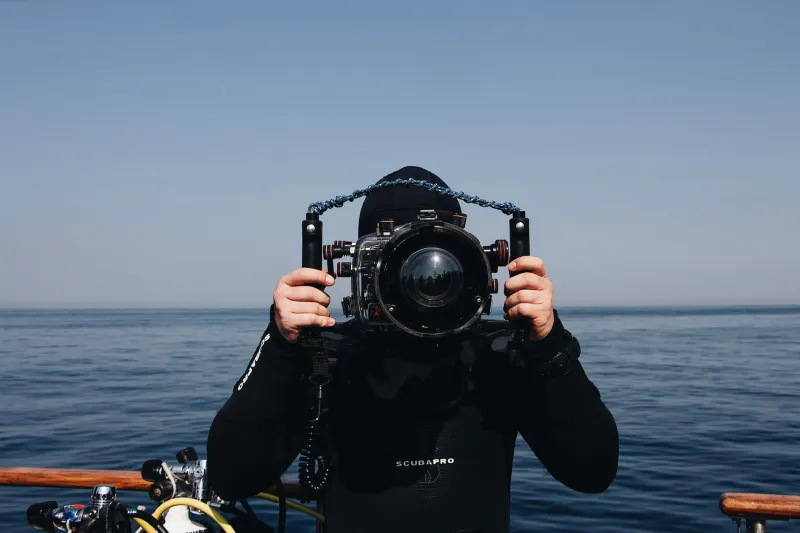
Ask any underwater photography forum what port you need for wide-angle shooting and you'll hear the same answer inside of thirty seconds: dome port, no question, end of discussion. And look — there's real optical reasoning behind that advice. But the story doesn't end there, and if you've ever wondered why your expensive dome setup still produces soft corners or mushy focus at the edges, you're not imagining things.
The dome port isn't magic. It's a compromise. A very useful compromise in the right situations, but a compromise nonetheless — and understanding exactly where it breaks down could save you a few hundred bucks and a lot of frustration.
Why Dome Ports Exist in the First Place
Water and glass interact in ways that punish flat surfaces. When light crosses from water into a flat port, it refracts — bending at the interface — and that refraction shrinks your apparent field of view by roughly 25 percent. A 16mm lens that gives you a sweeping 107-degree angle of view in air suddenly behaves more like a 21mm lens underwater. That's not a subtle difference. You lose significant coverage, and wide-angle shooting starts to feel cramped.
A dome port sidesteps this by creating a curved air space in front of the lens. Because the dome's curvature is centered on the lens nodal point, light rays hit the glass at near-perpendicular angles, which dramatically reduces refraction. Your field of view stays close to what you'd expect in air, and rectilinear lines stay rectilinear. For true wide-angle work — split shots, reef panoramas, big animal encounters where you want environmental context — that matters enormously.
So far, so good. Here's where it gets complicated.
The Virtual Image Problem Nobody Advertises
A dome port doesn't eliminate optical issues. It trades one set of problems for another. When you shoot through a dome, the curved surface creates a virtual image that sits much closer to the lens than the actual subject — typically somewhere between one and three feet in front of the port, depending on dome diameter. Your lens now has to focus on that virtual image rather than the real scene.
This is a problem because most lenses aren't designed to focus that close. To compensate, you either need to use a diopter (a close-up filter that shifts the focus range), shoot at very small apertures to maximize depth of field, or use a lens that has strong close-focus capability to begin with. Fail to account for this and you'll get soft focus across the entire frame — and it'll look worse toward the edges, where the virtual image curves away from the lens plane.
Smaller dome ports make this worse. An eight-inch dome places that virtual image closer than a nine-inch or ten-inch dome does. Budget domes in the five-to-six-inch range can push the virtual image so close that even stopped-down apertures struggle to compensate. You've paid for glass and you're fighting physics the entire dive.
Spherical Aberration and the Corner Problem
Even premium dome ports — the ones machined from optical acrylic or actual glass, with precise curvature and anti-reflection coatings — introduce spherical aberration at the edges of the frame. Light passing through the outer zones of a curved surface doesn't converge at exactly the same point as light through the center. The result is corner softness that no amount of post-processing sharpening can fully fix, because the information simply wasn't captured cleanly in the first place.
How noticeable this is depends heavily on your lens. Some wide-angle lenses are designed with dome port use in mind and handle the aberration gracefully. Others — particularly zoom lenses with complex element designs — interact with dome ports in ways that produce visible fringing, distortion, or soft quadrants. The lens-port pairing matters as much as the port itself, which is why generic "dome port for wide angle" advice is only half the picture.
When a Flat Port Actually Wins
Here's the part that surprises a lot of shooters: for focal lengths above roughly 35mm (full-frame equivalent), flat ports frequently outperform domes in measurable image quality. The field-of-view compression that makes flat ports problematic for ultra-wide shooting becomes a non-issue at normal and telephoto focal lengths. And without the virtual image artifact, you're focusing on your actual subject rather than an optical phantom.
Macro photography is the obvious example. A flat port paired with a 60mm or 100mm macro lens gives you razor-sharp, distortion-free images with none of the close-focus complications a dome creates. But it extends further than macro. Portrait-style wide shots of divers, close-focus wide-angle work on subjects within a foot or two of the port, and any scenario where corner sharpness matters more than maximum field of view — flat ports hold their own in all of these.
For video shooters specifically, flat ports often perform better than their reputation suggests. The 25-percent field-of-view reduction is less painful when you're already shooting in a cropped video format, and the absence of dome-related edge softness can make footage look noticeably cleaner, especially when you're not going ultra-wide anyway.
A Practical Decision Framework
Before defaulting to a dome port, work through these questions:
What focal length are you actually using? If you're not shooting below 24mm equivalent, a flat port deserves serious consideration. The field-of-view penalty shrinks at longer focal lengths, and the optical clarity benefits are real.
What's your minimum focus distance? If your lens struggles to focus closer than two feet, a dome port's virtual image is going to fight you constantly. Either pair the dome with a diopter, or reconsider whether a flat port suits your shooting style better.
How large is the dome? If budget constraints are pushing you toward a small-diameter dome — under seven inches — weigh that carefully. The optical compromises of a small dome can exceed those of a well-matched flat port.
Are you shooting split shots or over-unders? This is genuinely where domes earn their reputation. The refraction correction at the water surface makes split-shot photography dramatically easier with a dome, and no flat port workaround comes close. If split shots are part of your creative toolkit, a quality dome is worth the investment.
Is your lens dome-tested? Manufacturers and user communities have documented which lens-port combinations perform well. Seek that information out before buying. A lens that performs beautifully with one dome profile may be mediocre with another.
The Bottom Line
The dome port earned its status in underwater photography for legitimate reasons. For true wide-angle work and split shots, it remains the right tool. But "right tool" doesn't mean "always superior," and the reflexive recommendation to dome everything does new shooters a disservice.
Understand the optical compromises your dome introduces. Know which focal lengths and shooting scenarios actually benefit from flat port optics. And before you invest in a premium dome setup, make sure the lens you're pairing it with is actually going to play nice with the geometry.
The best port isn't the most expensive one — it's the one matched to what you're actually shooting. Getting that match right is the difference between a rig that frustrates you and one that disappears beneath you while you focus on the frame.