Shaky Footage, Fuzzy Thinking: How Narcosis Quietly Ruins Your Underwater Video at Depth

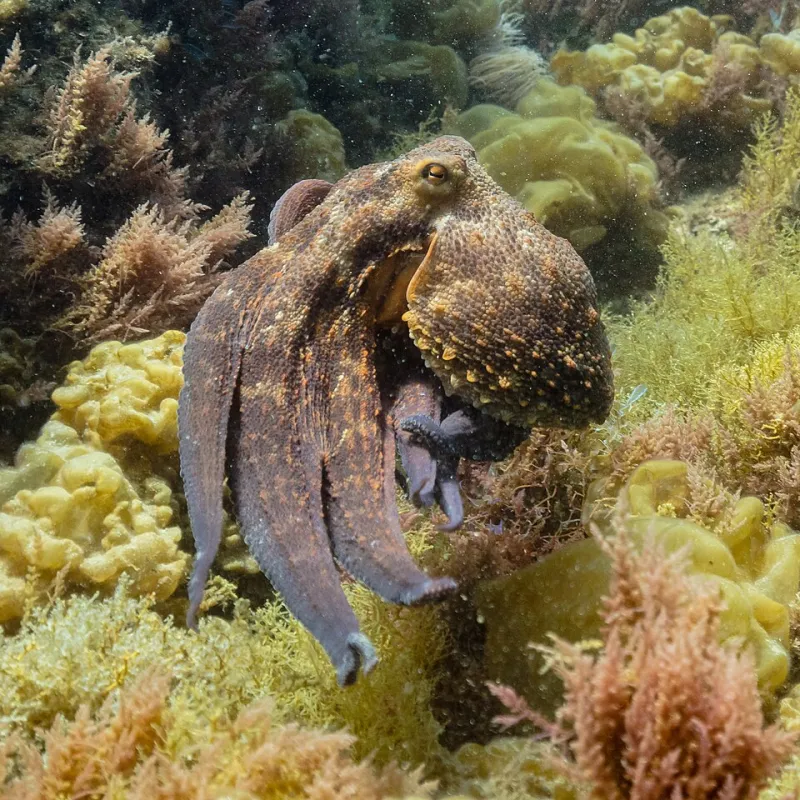
Photo by Photo by Mitchel Wijt on Unsplash on Unsplash
You surface, peel off your gloves, and plug your GoPro or mirrorless housing into the laptop. The dive felt great — clear water, good viz, a reef shark that cruised within arm's reach. Then you hit play.
The footage looks like it was shot during a minor earthquake. The horizon tilts. The shark drifts in and out of frame. That gorgeous wide shot you thought you nailed? It's a slow, nauseating pan to nowhere.
Before you blame the current or your buoyancy, consider this: the ocean wasn't moving that much. You were.
And the reason probably starts with the nitrogen in your tank.
What Narcosis Actually Does to Your Body (The Camera-Relevant Version)
Most divers know nitrogen narcosis as the "martini effect" — that fuzzy, slightly euphoric mental fog that sets in around 60 to 100 feet and deepens as you go. But the conversation usually stops at decision-making and situational awareness. What doesn't get talked about nearly enough is what narcosis does to your fine motor control.
At depth, elevated partial pressures of nitrogen interfere with nerve signal transmission. The result isn't just slower thinking — it's reduced precision in your hands and fingers. We're talking about the same muscle groups responsible for holding a housing steady, pressing a shutter button cleanly, and tracking a moving subject with your wrists.
Studies on manual dexterity at depth have shown measurable degradation in tasks that require fine motor coordination starting around 100 feet, even in experienced divers who feel completely "fine." That's the insidious part: narcosis impairs your ability to detect that you're impaired. You think you're holding the camera rock-steady. The footage disagrees.
The Three Ways Narcosis Shows Up in Your Footage
1. Micro-tremor and low-frequency shake
This is the most common symptom. Unlike current-induced movement, which tends to be rhythmic and directional, narcosis-related shake is irregular and low-amplitude. It looks like someone is breathing very hard while holding the camera — small, random oscillations that stabilization software struggles to fully compensate for because there's no consistent vector to predict.
If you've ever compared footage from a 40-foot dive and a 110-foot dive on the same day in the same conditions, you've probably already seen this difference. The shallow stuff is crisp. The deep stuff has a subtle wobble that softens everything.
2. Composition drift
This one's harder to spot in the moment. You set up what feels like a locked-off shot. You're hovering, perfectly still, camera pointed at a coral head. But over 20 or 30 seconds, the frame slowly migrates. The subject slides from center to edge. The horizon tilts a few degrees.
This isn't buoyancy failure — it's your brain losing its grip on the proprioceptive feedback that tells you where your hands are in space. Sober, you'd unconsciously correct. Narced, the correction loop slows down, and drift goes unnoticed.
3. Focus hunting and missed trigger timing
If you're shooting stills, narcosis affects the moment-to-moment rhythm of your shooting. You might hesitate on the shutter at exactly the wrong instant. You might accidentally bump the housing controls and shift a dial without realizing it. Manual focus pulls become less precise. Even autofocus systems suffer indirectly, because you're less likely to correctly pre-position the camera to give the AF system a fighting chance.
Equipment Choices That Compensate for Impaired Motor Control
The good news is that gear can do a lot of the work your narced brain can't.
Optical image stabilization and electronic stabilization
If you're shooting video, this is the single biggest thing you can do. Cameras with in-body image stabilization (IBIS) — Sony's a7 series, the OM System OM-5, Panasonic's Lumix line — handle micro-tremor far better than cameras without it. In a housing, IBIS still functions and it's genuinely effective against the kind of low-frequency shake narcosis produces.
Action cameras like the GoPro Hero 13 and DJI Osmo Action 5 Pro have electronic stabilization modes (HyperSmooth and RockSteady, respectively) that are surprisingly effective even at depth. Just be aware that aggressive stabilization crops your frame, which matters more in tight spaces.
Wider lenses and shorter focal lengths
Tele and macro work at depth is a recipe for narcosis-amplified blur. A 100mm macro lens punishes any movement brutally. Go wide when you're deep. A fisheye or ultra-wide rectilinear lens is far more forgiving of small positional shifts, and the depth of field is broader, meaning focus is more likely to land even if your pre-focus technique is slightly off.
Tray handles and arm systems
A well-balanced tray with dual handles gives you two anchor points instead of one. This mechanically reduces the effect of single-hand tremor. The wider your grip, the more stable the system — basic physics. If you're doing deep video work regularly, a tray setup is worth every penny.
Shooting Techniques That Actually Help
Gear only goes so far. Technique matters too, and the good news is that some of these habits are easy to build before depth becomes a factor.
Use reference points for composition. Before you descend, get into the habit of framing against structural elements — the reef edge, a rock, a thermocline layer. At depth, your brain needs external anchors to compensate for reduced proprioception. A visible reference in your frame helps you detect drift before it becomes a problem.
Slow everything down. This sounds obvious but it's easy to forget. Narced divers often feel like they're moving in slow motion already, but their actual movements can be jerky and imprecise. Consciously exaggerate how slowly you pan, tilt, or track. Your footage will be smoother, and the mental discipline of deliberate movement partially counteracts the motor control deficit.
Pre-set your critical camera controls before you descend. Every time you fiddle with aperture, ISO, or white balance at 100 feet, you're asking narced fingers to manipulate small controls under reduced tactile sensitivity. Dial in your exposure and settings in the 30-to-40-foot range on the way down. By the time you're deep, all you should be doing is pointing and shooting.
Shoot shorter clips more often. A 60-second clip at depth has 60 seconds of opportunity for drift and shake to accumulate. A series of 10-to-15-second clips gives you more usable moments and is easier to stabilize in post.
Reviewing Your Own Footage as a Diagnostic Tool
Here's a practical exercise: pull up footage from your last three dives at different depths and watch them back-to-back with the sound off. Pay attention to how steady the horizon is, how cleanly subjects stay centered, and whether pans feel intentional or accidental.
You'll almost certainly see a pattern. Shallow dives, tight technique. Deep dives, things get sloppy in ways that don't match the conditions. That's not a gear problem or a buoyancy problem. That's nitrogen, and recognizing it is the first step to working around it.
The ocean rewards divers who understand their own limitations as much as it rewards those who push deeper. Your camera doesn't lie — and sometimes the most useful thing your footage can tell you is exactly what your body is doing at depth, even when your brain insists everything is fine.